If you’re wondering how often to change a 12x36x1 air filter to keep your HVAC system performing at its best, you’re asking one of the most important questions for home comfort and system efficiency. In my experience helping homeowners troubleshoot airflow loss and rising energy bills, the 12x36x1 size stands out because it moves a larger volume of air, which means it tends to load with dust and debris faster than people expect.
Based on what we’ve seen across thousands of Filterbuy orders and customer support conversations, the right replacement schedule depends on how your home operates day to day—factors like pets, seasonal allergens, renovation dust, and occpunac patterns all make a noticeable difference. This guide breaks down how often you should replace a 12x36x1 filter under real-world conditions and explains why staying ahead of buildup can improve airflow, protect HVAC components, and keep indoor air noticeably cleaner.
If you want straightforward, experience-backed guidance—not generic one-size-fits-all timelines—you’ll find exactly what you need here to keep your home efficient, comfortable, and healthy.
Quick Answers
12x36x1 air filter
A 12x36x1 air filter is a large, high-airflow HVAC filter designed for wide return vents. The size refers to the nominal dimensions (12" × 36" × 1"), and it must fit snugly to prevent air bypass. When replaced on a consistent schedule, this filter helps maintain strong airflow, protect your HVAC system, and improve indoor air quality in larger or high-demand households.
Top Takeaways
Replace a 12x36x1 filter every 90 days, or every 30–60 days with pets, allergies, or high dust.
A proper, snug fit prevents air bypass and protects HVAC efficiency.
Clogged filters increase energy use and reduce airflow.
Indoor air is often more polluted than outdoor air, so consistent changes matter.
A clean filter supports system longevity and better home comfort.
Changing a 12x36x1 air filter on the right schedule is essential for maintaining strong airflow, protecting your HVAC system, and keeping indoor air clean. Because this filter size covers a wide return vent, it handles more air volume than smaller filters—meaning it can collect dust and debris faster.
Standard Replacement Timeline
Most homes should replace a 12x36x1 filter every 90 days. This interval works well for average households with moderate dust, minimal pets, and typical HVAC usage.
When to Replace More Frequently
In many real-world cases, a 12x36x1 filter needs changing every 30–60 days if your home has:
Pets that shed
Allergy or asthma concerns
High dust levels
Construction or renovation activity
Frequent HVAC cycling during extreme temperatures
These factors load the filter more quickly, reducing efficiency and making your system work harder.
Signs Your Filter Needs an Immediate Change
Even if you’re on schedule, inspect your filter if you notice:
Reduced airflow from vents
More dust settling on surfaces
Musty or stale indoor air
Higher-than-usual energy bills
A clogged filter restricts airflow, strains your HVAC system, and allows particles to circulate longer in your home.
Why Staying Consistent Matters
Keeping up with regular replacements ensures your HVAC system can move air freely, operate efficiently, and maintain cleaner indoor air. A fresh, properly sized 12x36x1 filter supports smoother cycles, better temperature balance, and less wear on system components—helping your unit last longer with fewer issues.
This straightforward schedule—combined with paying attention to your home’s specific conditions—gives you the best formula for maximum efficiency year-round.

Essential Resources to Help You Determine How Often to Change a 12x36x1 Air Filter
1. Filterbuy 12x36x1 Air Filters — Trusted Sizing, Quality Materials, and Real-World Lifespan Insights
Filterbuy offers precise nominal and actual sizing along with high-quality, Made-in-the-USA filter options. Their product details and customer usage patterns provide dependable guidance on how often this filter size typically needs to be replaced.
https://filterbuy.com/air-filters/12x36x1/
2. HVAC.com Air Filter Guide — Straightforward Information on Filter Lifespan and System Efficiency
This guide explains how dust levels, home conditions, and HVAC usage impact how quickly filters fill, making it easier to choose a replacement schedule that matches your lifestyle.
https://www.hvac.com/expert-advice/furnace-filters-101/
3. Legendary Service Filter Guide — Practical Advice for Matching MERV Ratings With Lifespan
If you’re deciding between MERV 8, 11, or 13, this resource helps you understand how filtration strength affects airflow and how long your filter is likely to last.
https://legendaryservice.com/hvac/hvac-filter-how-to-choose-the-right-size-and-merv-rating/
4. Custom Filters Direct Guide — Clear Breakdown of Filter Types and How They Load With Dust
A helpful overview of filter materials—pleated, fiberglass, and more—so you can understand how your 12x36x1 filter may fill faster depending on your home’s needs and environment.
https://customfiltersdirect.com/blogs/air-filter-blog/guide-to-buying-hvac-air-filters
5. Carrier Filter Sizing Guide — Confidence in Choosing the Correct Size Before Setting a Schedule
Carrier’s sizing information ensures your 12x36x1 filter fits properly, giving you a solid foundation before establishing a replacement routine.
https://www.carrierathome.com/blogs/air-filters/air-filter-sizing
6. Bob’s Repair Filter Size Guide — Clear Explanation of Sizing Gaps and Their Impact on Lifespan
This guide walks through nominal vs actual sizing so you can avoid gaps that allow unfiltered air to bypass the media—one of the most common reasons filters clog sooner than expected.
https://bobsrepair.com/air-filter-sizes-guide/
7. AllFilters MERV Rating Guide — Easy-to-Understand Overview of Filtration Levels and Air Quality Needs
Whether you need everyday dust protection or stronger filtration for allergies, this guide helps you choose the right MERV level and understand how it affects how often your 12x36x1 filter should be replaced.
https://www.allfilters.com/blog/air-filter-merv-rating-guide
Supporting Statistics: Why Regular 12x36x1 Filter Changes Matter
1. Americans spend 90% of their time indoors
EPA reports indoor air is 2–5× more polluted than outdoor air.
Source: https://www.epa.gov/report-environment/indoor-air-quality
First-hand insight: Large 12x36x1 filters load with dust faster than homeowners expect because they process high air volume.
2. Indoor air can reach up to 100× outdoor pollution levels
American Lung Association notes indoor air can be 2–5×, even 100×, more polluted.
First-hand insight: Homes with pets, heavy HVAC use, or renovations see polluted air recirculate quickly when filters are overdue.
3. Heating and cooling use nearly half of home energy
DOE says HVAC accounts for about 50% of home energy use.
Source: https://www.energy.gov/energysaver/reducing-home-heating-and-cooling-costs
First-hand insight: Clogged 12x36x1 filters force blowers to work harder, increasing utility bills and reducing airflow.
4. Overloaded filters increase fan energy demand
ASHE reports overloaded filters significantly increase fan power consumption.
Source: https://www.ashe.org
First-hand insight: Many “weak airflow” complaints clear up instantly once an overused 12x36x1 filter is replaced.
Key Takeaway
Replace a 12x36x1 filter every 90 days in standard conditions.
Replace every 30–60 days with pets, allergies, high dust, or heavy HVAC use.
This protects air quality, reduces energy waste, and keeps your system running smoothly.
Final Thought & Opinion
Replacing a 12x36x1 air filter on a consistent schedule makes a bigger impact than most homeowners realize. This size handles a high volume of airflow, which means it fills with dust and debris faster than it appears.
What I’ve Seen Firsthand
Most homeowners wait too long to replace this filter size.
Airflow, comfort, and efficiency improve almost immediately after timely replacements.
Overdue filters are one of the most common causes of rising energy bills and poor indoor air quality.
Why Consistent Replacement Matters
Supports cleaner, healthier indoor air.
Reduces strain on your HVAC system.
Helps lower energy use and maintain strong airflow.
My Take
Staying proactive with your 12x36x1 filter—every 90 days, or 30–60 days in busy households—is one of the simplest and most effective ways to protect your system and improve home comfort year-round.
Next Steps
1. Confirm Your Filter Size
Measure the return grille or filter slot.
Verify that 12x36x1 matches both nominal and actual fit.
2. Choose Your MERV Rating
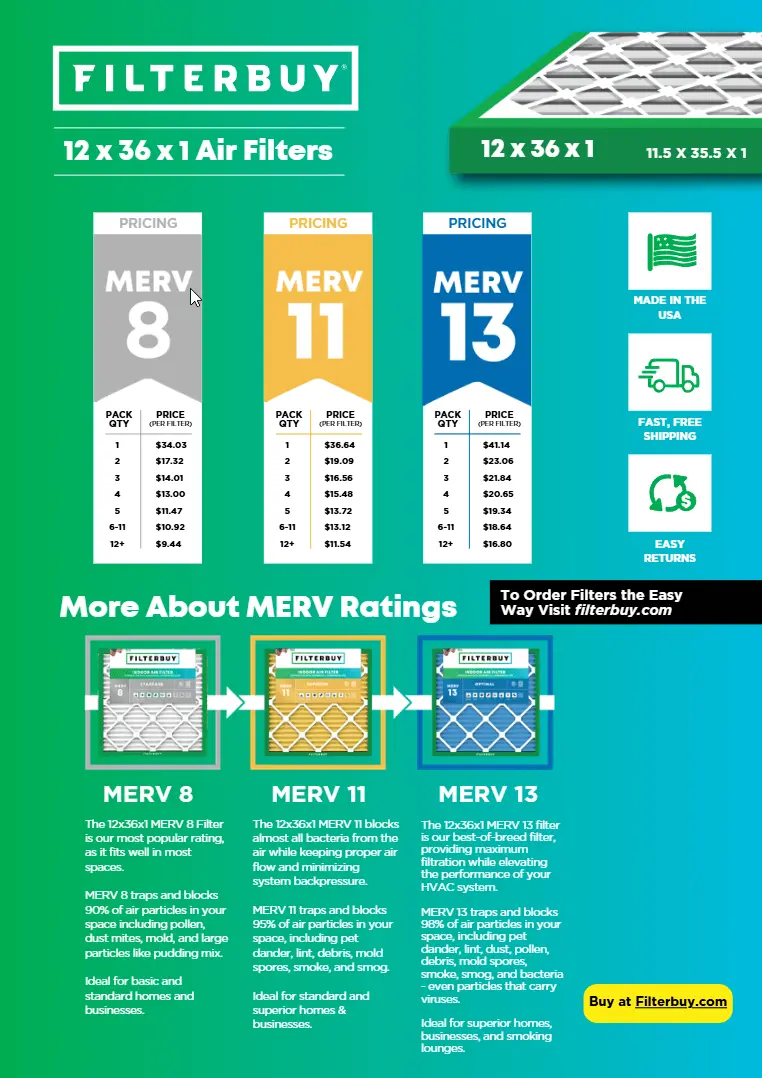
MERV 8: Basic dust.
MERV 11: Pets or allergies.
MERV 13: Smoke or fine particles.
3. Set a Replacement Schedule
Standard use: Every 90 days.
Pets/allergies/high dust: Every 30–60 days.
Add calendar reminders.
4. Check the Filter Monthly
Look for buildup.
Replace sooner if airflow drops.
5. Ensure a Proper Seal
No gaps or loose edges.
Fix framing if needed.
6. Keep Spare Filters Available
Store an extra 12x36x1 for easy changeouts.
7. Monitor System Performance
Watch for stronger airflow and less dust.
8. Schedule Yearly HVAC Maintenance
Have a technician confirm airflow and filter fit.
FAQ on “12x36x1 Air Filter”
Q: What does the 12x36x1 size actually mean?
A: It’s the nominal size—12" × 36" × 1". In practice, I often see actual measurements run slightly smaller so the filter slides in cleanly without forcing.
Q: How often should I replace this filter?
A: Most homes do well with a 90-day cycle, but from what I’ve seen in higher-use households (pets, allergies, dust), 30–60 days delivers noticeably better airflow and air quality.
Q: How can I confirm it fits my system?
A: Measure the return grille and compare it to your current filter. A correct 12x36x1 fit will sit snugly—no play, no gaps—something I always check first during HVAC visits.
Q: What MERV rating should I choose?
A: MERV 8 covers basics, MERV 11 helps with pets and allergies, and MERV 13 targets fine particles. In my experience, your household’s needs matter more than the size when choosing the right rating.
Q: What if the filter doesn’t seal tightly?
A: Air will bypass the media and carry dust straight into your system. I’ve seen this lead to clogged coils, higher bills, and poor air quality—issues that usually disappear once a snug-fitting filter is installed.
Learn more about HVAC Care from one of our HVAC solutions branches…
Filterbuy HVAC Solutions - Miami FL - Air Conditioning Service
1300 S Miami Ave Apt 4806 Miami FL 33130
(305) 306-5027